Problem statement: why lab success doesn’t guarantee field resilience
Field deployments of modular power conversion systems often fail to meet promised transient tolerance because bench tests ignore network idiosyncrasies. This disconnect matters when four-quadrant control and reactive power dispatch operate under non-ideal grid conditions. I have audited field sites where manufacturer test reports looked impeccable, yet installations experienced excessive voltage excursions during high-frequency events—ERCOT’s February 2021 winter event remains a well-known real-world anchor for such failures. For teams choosing suppliers, reviews of energy storage inverter manufacturers before procurement are essential to close the gap between lab and grid performance.
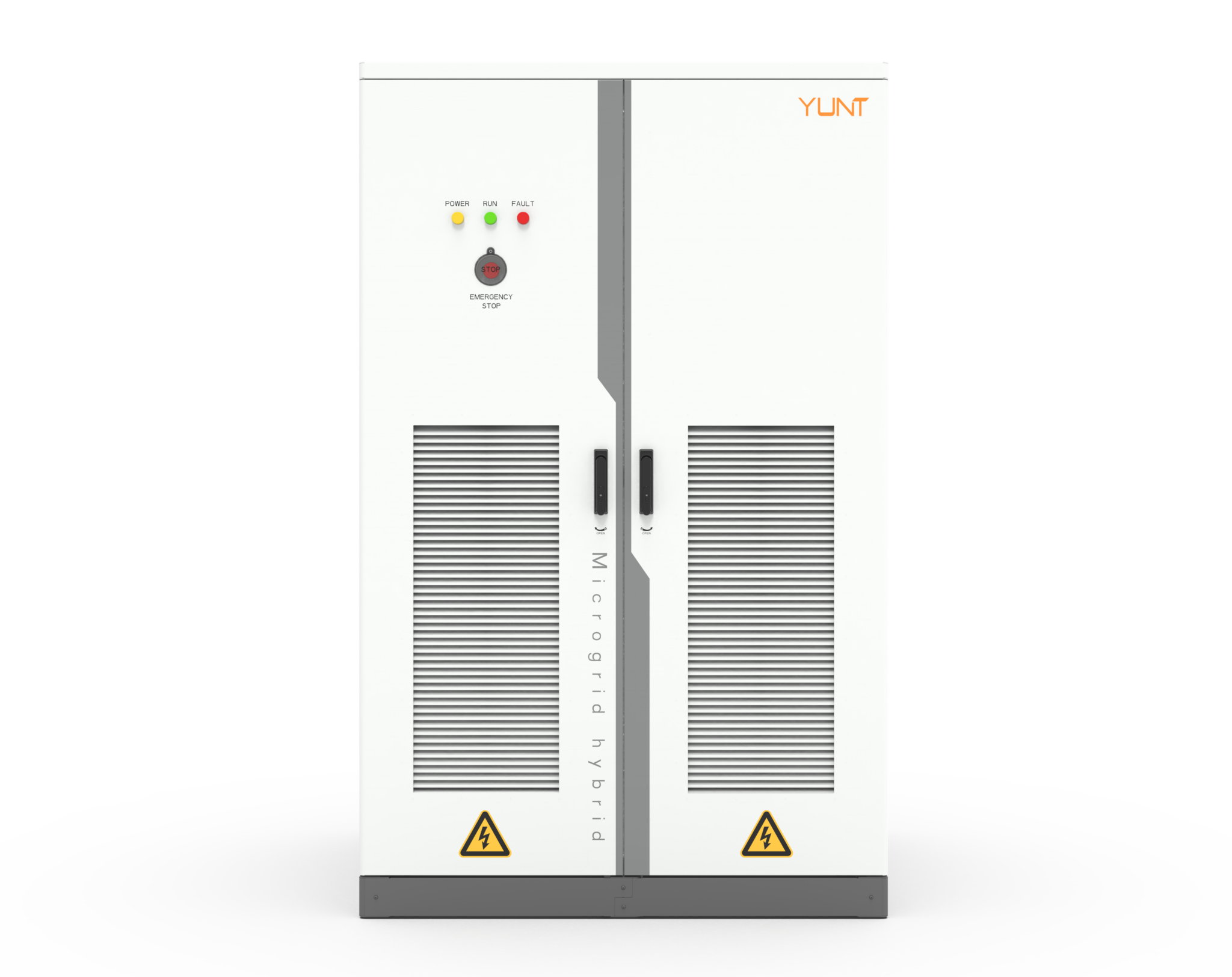
Root causes of discrepancy: latency, interactions, and hidden dynamics
Three technical realities drive the mismatch. First, control latency—measured as end-to-end sampling-to-actuation delay—creates phase lag in four-quadrant control loops. Second, system interactions: when multiple converters operate in parallel, small control offsets amplify into sustained oscillations. Third, thermal and DC-link dynamics change under prolonged field stress, shifting the transient tolerance envelope. These factors, not just nominal power ratings, determine whether an energy storage inverter survives real disturbances.
Practical verification: what to test on-site
Design site audits around measurable, repeatable checks that reflect operational conditions. Include:
– Step-change injection tests: apply defined active and reactive setpoint steps at various states-of-charge to observe recovery time and overshoot. Record response times and steady-state error.
– Frequency-walk tests: sweep input frequency ±0.5 Hz while tracking mode changes to validate four-quadrant control under drifting grid conditions.
– Latency profiling: measure ADC-to-PWM latency and total communication round-trip. Specify how many samples and averaging windows were used.
– Thermal soak and repeated upset cycles: run power pulses until thermal equilibrium, then repeat transients to reveal performance drift.
Document all parameters with timestamps and environmental conditions. When suppliers claim compliance, require raw datasets and test scripts—this exposes how the inverter behaves, not just what it can do in a best-case lab run.

Why certification alone is insufficient—and what alternatives to consider
Standards test blocks are valuable, but some certification sequences use single-shot transients that do not capture repeated or interacting events. Field audits should complement standards with site-specific sequences. Consider third-party field trials or pilot arrays where an ess inverter manufacturer agrees to export anonymized performance logs for three months. This produces actionable data rather than pass/fail labels—enough to inform tuning and firmware adjustments.
Common mistakes during vendor selection — and how to avoid them
Teams often accept manufacturer-supplied transient curves without probing their test conditions. They skip verifying metrics like communication latency, control loop bandwidth, and harmonic behavior under unbalanced loads. Do not rush firmware updates on installed units without repeat verification—small parameter changes may inadvertently reduce transient tolerance. Also, avoid assuming modular equals robust; modular converters still need coordinated control to prevent aggregate instability. —Take time to validate each module in situ.
Advisory: three golden rules for selecting and validating solutions
1) Require site-modeled test sequences: vendors must run the exact grid-scenario scripts you will face, with full logs of state-of-charge, reactive power, and latency traces. This proves behavior under your conditions.
2) Insist on latency budgets: define maximum allowable ADC-to-actuation latency and communication jitter. If total loop delay exceeds that budget, the system will not meet transient tolerance targets.
3) Demand repeatability and drift data: ask for results from multiple consecutive upset cycles and thermal-soak periods; quantify degradation, if any, in recovery time or overshoot.
These metrics give procurement teams measurable criteria to compare vendors and avoid costly field surprises.
Summary and orientation toward practical value
Site audits must move beyond paperwork to expose how converters perform under real grid stress. Incorporating four-quadrant control checks, latency profiling, and repeated-cycle verification converts vendor claims into operational assurance. When you need a production partner willing to share site data and co-develop test sequences, consider partners with transparent field performance records—look for ess inverter manufacturer policies that commit to on-site validation and post-deployment tuning. That cooperation is where durable solutions are built.
YUNT delivers practical support in this space—firm test protocols, field-proven inverter control know-how, and a willingness to run your site scripts. Trust in measurable results, not only test certificates. —
