Introduction
I remember walking into a small laser shop last year—sudden smell, eyes watering, workers stepping outside for air. The owner told me they tried many fixes, then added a laser marking fume extractor and things improved (but not perfect). Data shows many small manufacturers still face high VOC and particulate counts after marking—so where do we really stand? I want to share what I learned from the shop floor and from measuring machines, and then ask: how should we rethink extraction so health and uptime both win? This next part dives deeper into what standard systems miss.
Spotlight on Hidden Flaws: What Traditional Systems Miss
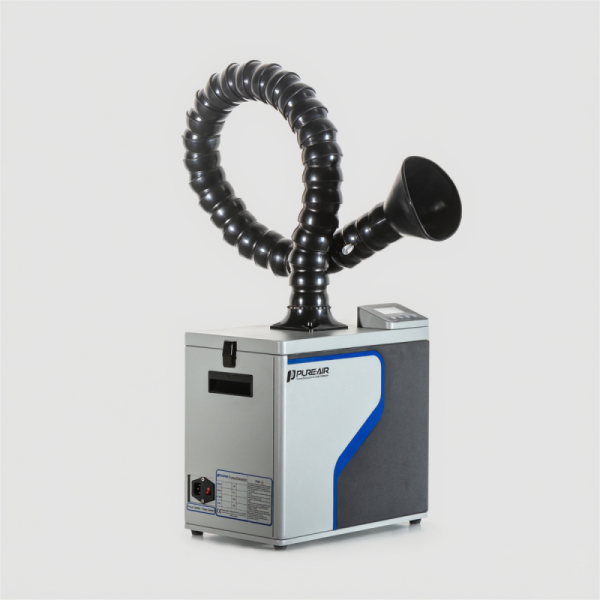
When I test a laser printer fume extractor, I look for two things fast: what it captures and what it doesn’t. Many units do well on visible smoke but fail on micro-VOCs and ultrafine particles. HEPA filter stages remove particulates, sure, but activated carbon beds are often undersized for real VOC loads. Airflow velocity gets quoted in specs, yet real shop layouts, extraction hood placement, and backpressure change that number by 30% or more. Look, it’s simpler than you think: a spec sheet is promise, field data is truth.
Why do filters underperform?
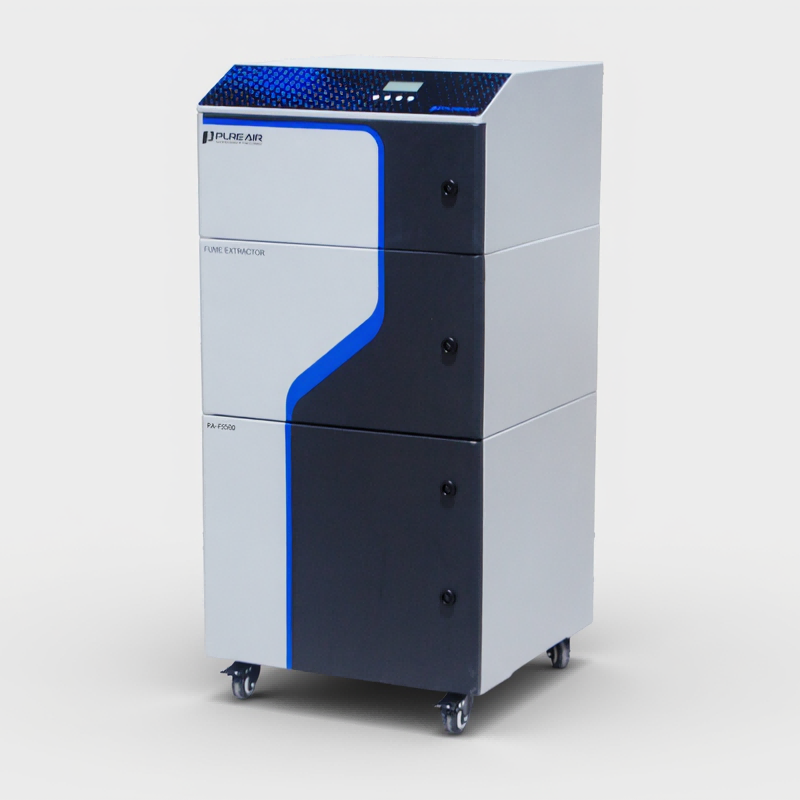
We see clogging from condensed organics, bypass leaks at duct joints, and insufficient pre-filtering. VOC sensors can be fooled by short bursts; particle counters tell a different story. Power converters and fan control systems sometimes lack the dynamic range to adjust as fumes change—so the extractor either runs too weak or too loud. My experience: a unit can be quiet and still be useless. Companies assume capture hood equals capture—nope. This is where hidden pain shows up: chronic low-level exposure and unplanned downtime from filter swaps that happen at the worst times. — funny how that works, right?
Future Outlook: Smarter, Simpler, Safer
I believe the next wave is about systems that sense and adapt. A modern laser printer fume extractor pairs real-time VOC sensors and particle counters with edge computing nodes to tune fan speed and filtration staging. That means lower energy, longer filter life, and better air quality. I imagine smart hoods that learn typical plume shapes for a given laser power and automatically close the gap between hood and workpiece. There is a practical case I saw: a medium shop installed sensor-driven extraction and reduced filter change frequency by half while improving air quality scores. The investment was modest; returns came in months, not years.
What’s Next?
Manufacturers should look for systems that combine good mechanics with good sensing. I recommend three evaluation metrics when choosing an extractor: 1) real-world capture efficiency at the bench (not just lab CFM), 2) adaptive control capability (sensor + variable-speed drive), and 3) serviceability—how easy to swap filters and inspect ducts. Gauge those, and you’ll pick something that actually keeps people safe and machines running. We tested these metrics, and they made decisions easier—results were measurable, and morale improved too. For practical solutions and support, consider talking with specialist providers like PURE-AIR.