The problem kitchens keep asking us to solve
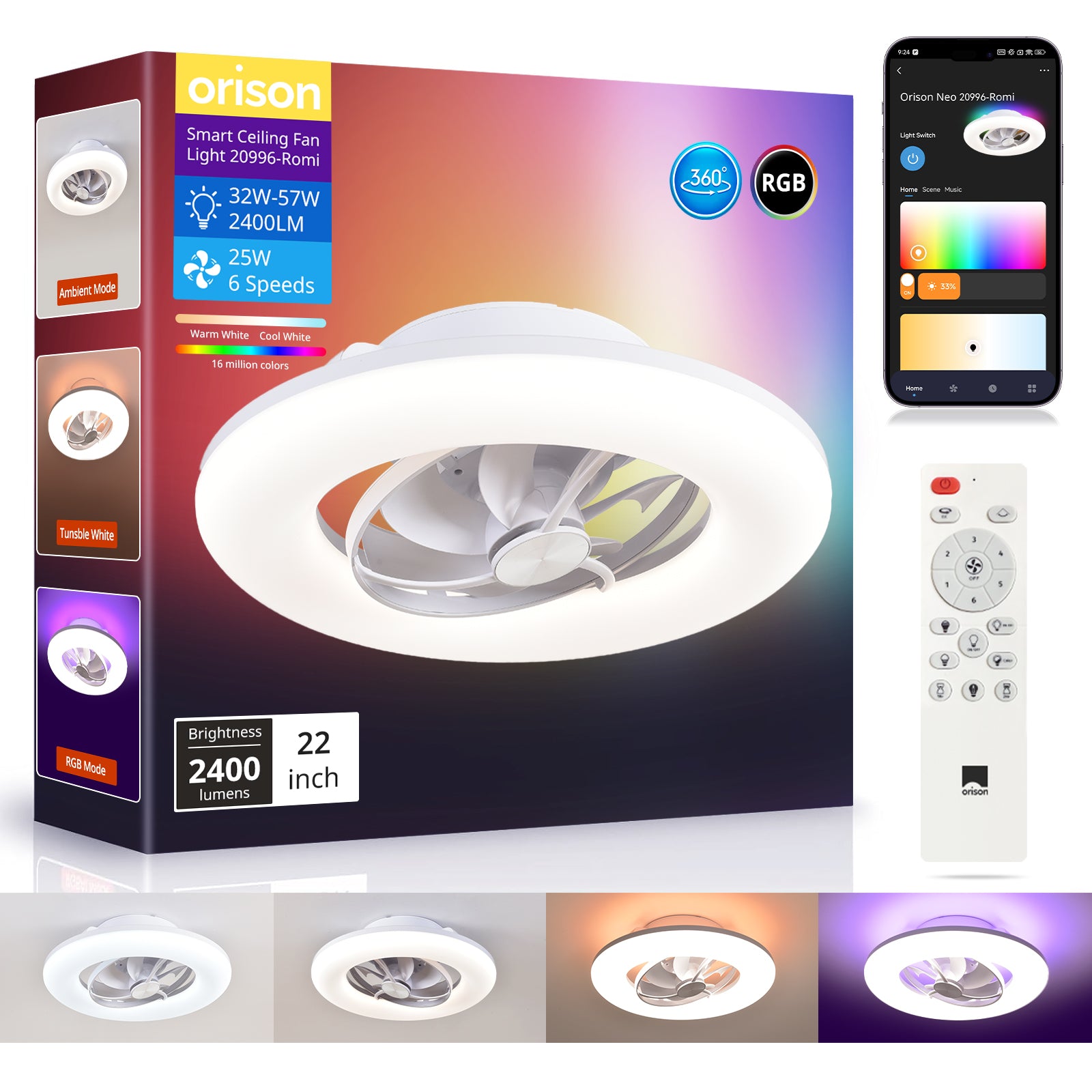
Apartment cooks, open-concept homeowners, and product designers all circle the same complaint: range hoods that either roar like a jet or barely move the smoke. Noise, ineffective capture, and hard retrofit constraints make kitchen ventilation a thorny systems problem. That’s why small, well-tuned solutions matter—think of how a well-placed ceiling rotating fan can change thermal comfort: the right mechanical design and user controls can make all the difference. In a problem-driven frame, Orison’s portable hood is interesting because it treats silence and airflow as co-equals rather than trade-offs.
What “quiet” actually costs you (and why it shouldn’t)
When designers promise whisper-quiet performance, the risk is usually a hidden loss in capture efficiency. Two metrics matter: CFM (cubic feet per minute) for capture and sone for perceived noise. A low-sone hood with mediocre CFM simply moves the problem elsewhere — you still get lingering odors and grease deposition. Orison’s philosophy pivots on matched engineering: acoustic damping, optimized inlet geometry, and a brushless DC motor to preserve CFM while lowering sone ratings. The idea is simple on paper but tricky in practice — minimize turbulence without killing airflow.
How Orison approaches the engineering trade-offs
Orison breaks the problem into three practical modules: capture strategy, motor and airflow path, and user controls. Capture strategy focuses on hood geometry and placement to reduce back-drafting; motor and airflow path refine impeller design and ductless recirculation pathways; controls include variable speed and smart timers so the system runs only as hard as needed. They leverage variable speed drives and sealed bearings to reduce vibration transmission — small details that reduce both mechanical noise and maintenance. The result is a portable hood that aims for effective capture at moderate CFM with sone levels acceptable for open-plan living.
Real-world anchor: why this mattered after 2020
During the 2020 pandemic, millions cooked at home more often and noticed ventilation shortcomings—especially in dense cities like New York where retrofitting ducts is costly. That surge in attention pushed consumers toward quieter, plug-and-play solutions that improve indoor air quality without major construction. Orison’s emphasis on ductless filtration and low-vibration operation speaks to that market reality: people wanted effective extraction and quiet operation while working, schooling, or entertaining at home. The product design therefore responds to real behavioral change, not just engineering neatness.
Testing notes, practical trade-offs, and a human aside
In lab-like tests you watch three levers: inlet design, impeller efficiency, and acoustic insulation. Orison appears to prioritize optimized inlet capture and a high-efficiency impeller over sheer fan speed — which keeps CFM useful while avoiding noisy motor RPMs. That said, ductless filtration introduces re-circulation losses and requires maintenance: expect more frequent filter changes than with a ducted hood. And yes — there’s always a moment when a cook wants the loudest, fastest setting for real smoke; good controls make that option available without making it the default.
Alternatives and when to choose them
If you can install ducted ventilation, a high-CFM ducted hood still provides the cleanest solution for heavy frying or commercial-style kitchens. For renters, compact ductless units with activated carbon and particulate filters are sensible, but watch filter service intervals. Portable extractor fans or under-cabinet axial units are cheaper but often louder for the same CFM. If you already own quiet ceiling devices—an oscillating ceiling fan with light in a nearby room can help distribute airflow, reducing the hood’s burden during light cooking events.
Common mistakes buyers and specifiers make
1) Assuming noise ratings are comparable—manufacturers sometimes report different sone measurement conditions. 2) Ignoring capture height and hood placement; an efficient hood poorly positioned fails. 3) Treating ductless as maintenance-free; carbon and particulate filters saturate. Test install with your actual cooktop and check for cross-drafts before finalizing. —
Three golden rules for choosing a quiet, high‑performance portable hood
1) Match capture to cooktop: prioritize inlet geometry and measured CFM at realistic mounting heights rather than peak RPM numbers. 2) Demand both acoustic and airflow specs: ask for sone at specified speeds alongside CFM curves; silent operation with no capture is useless. 3) Plan lifecycle costs: include filter replacement cadence, filter type, and warranty on brushless motors and bearings when comparing unit prices.
Those three metrics make evaluation objective and durable. Designers and homeowners who apply them will avoid the usual compromises and choose systems that really solve the problem — which is precisely why many product teams look to Orison as an example of practical, human-centered engineering. Worth it.
